Conservation and laboratory · HEXPEPS GUIDE
How to preserve peptides: dry, solution and transport
Conservation depends on the product and its condition. A published deadline for a dry material should not be automatically carried over to the same reference after preparing a solution.
FAST RESPONSE
Does a shipment without ice mean the peptide is spoiled?
It does not allow you to conclude it on your own. It is necessary to know the reference, its dry or solution state, the transit conditions and the applicable stability data. Preservation afterward and tolerance during shipping are different questions.
 Editorial illustration · Hexpeps
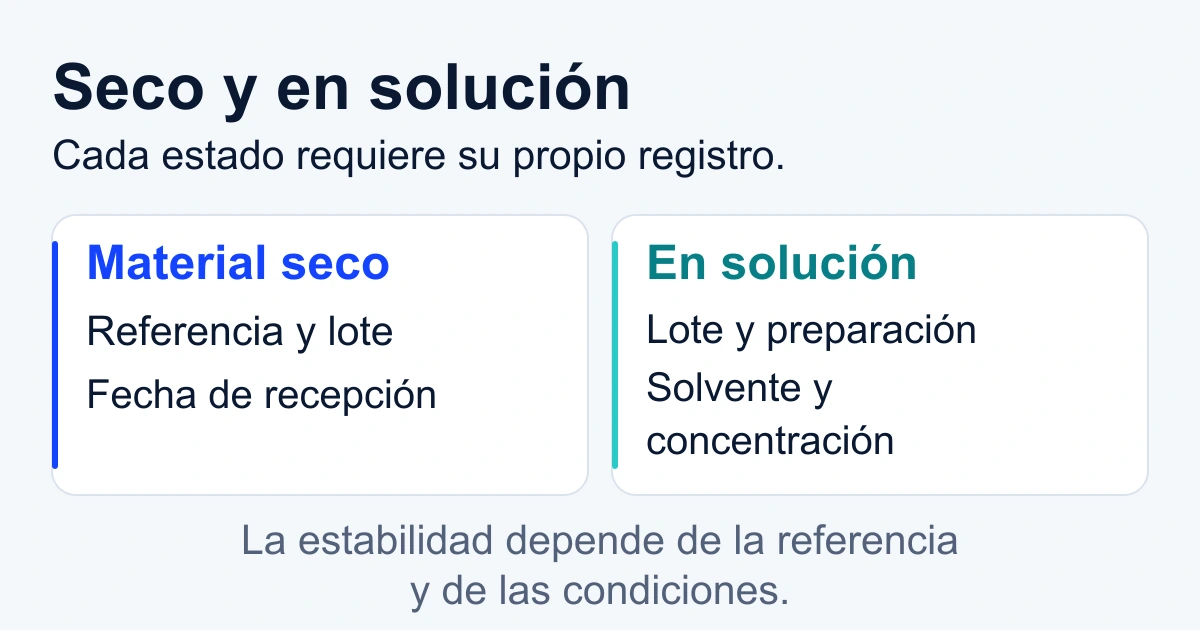
Distinguishes dry material and solution
GenScript recommends paying attention to the characteristics of the peptide and differentiating the preservation of lyophilized material from preservation in solution. It also highlights factors such as humidity and freeze-thaw cycles.
Do not convert a general guideline into the expiration date of a batch. Use the manufacturer's label and specification for specific reference.
Make a conservation record
Write down the reference, lot, date of receipt, location and conditions indicated. For a prepared solution, add preparation date, solvent, concentration and responsible.
If the protocol requires fractionation, document the aliquots and their identification. The objective is to know what has been used and what has happened to each sample, not to reconstruct it from memory at the end of the test.
Check transit separately
Ask about the transport condition and how an incident is evaluated. Just because a sample reaches room temperature does not in itself allow us to conclude that it has degraded or that it maintains all its specifications.
Maintain shipping data, packaging appearance, and any available records. If there is a deviation from the specified condition, consult the supplier and apply the laboratory acceptance procedure.
Appearance does not measure stability
A visible change may justify a review, but the absence of change does not verify composition or activity. If stability is critical to the project, request data or analysis appropriate for that purpose.
Do not use forum deadlines, dates from another reference, or instructions from a different solvent as a universal rule. A useful response identifies product, status, lot, and condition.
What to do if the package arrives hot?
A sensation when touching the package does not reconstruct the maximum temperature or duration of exposure. Records the date received, dry or solution state, packaging, and any temperature indicators or records. Ask the supplier for stability data and the acceptance criteria applicable to that reference.
Do not extrapolate the tolerance of a dry peptide to all products or their solutions. If transportation violates an agreed condition, keep the material identified and request a documented evaluation before accepting it for testing.
| Data | Why it matters |
|---|---|
| Reference and lot | Stability is material specific |
| Dry or in solution | They do not necessarily share the same conditions |
| Time and temperature record | They allow you to evaluate a specific exhibition |
| Transport specification | Defines the condition that was agreed |
| Documented response | Leave a record of acceptance, analysis or replacement |
Humidity and state changes: what to record
Bachem's handling guide highlights humidity and environmental exposure when working with freeze-dried material. The record must distinguish reception, first opening and solution preparation. They are different milestones, and each one can change which stability data is applicable.
Avoid setting a new expiration date based on intuition or an isolated experience in a forum. If the project depends on maintaining a property for a certain period, request stability data or an analytical plan that covers that period and those conditions.
Frequently asked questions
How long does a peptide last once reconstituted?
There is no universal deadline. It depends on the reference, preparation conditions, conservation and stability data available.
Does the expiration date of the dry vial remain after dissolving it?
It should not be assumed. The solution preparation has conditions and stability that must be defined separately.
Do all peptides need refrigerated shipping?
A universal condition cannot be set. The reference, its status and transit time must be defined, with supporting documentation.
Does freezing make a degraded product valid again?
It does not demonstrate that its specification has been recovered. Keeping after an incident does not erase what happened during transit.
Can I decide the stability by the appearance of the powder?
Appearance may warrant a review, but it does not measure identity, content or degradation. Consult the specification and appropriate tests.
Sources consulted
References consulted for this guide. They do not constitute certificates of Hexpeps products or endorsements of our store.
Conversations that help identify these doubts
Origin of questions, not medical evidence or seller verification. The full selection and its limits are explained in our editorial criteria.
- How long does freeze-dried food last in the refrigerator or freezer?
- Does freezing damage any peptides? The instructions consulted contradict each other.
- Does four or five days of hot transportation degrade the order?
- Is there a universal time frame of 30 minutes for MOTS-c or does it depend on stability data?
Editorial content on laboratory concepts and documentation. It does not replace health advice nor does it establish guidelines for human or animal use.
Consult formats, prices and documentation
In each file you can choose the presentation, consult its published COA and prepare your order online.
Choose product and format →Do you want to collaborate with Hexpeps? Discover our affiliate program. Affiliate program