GUIDES BY TOPIC · 4 ARTICLES
Peptide quality: COA, purity and identity
A purity percentage does not answer all questions. Learn to relate batch, sample, methods and results, and to verify the document with its issuer.
Chromatographic purity, identity, quantity, sterility and endotoxin are different properties. The scope of the report matters as much as its authenticity. Start with the reading checklist, continue with the comparison of tests and review how the laboratory and its accreditation are confirmed.
Start with: How to Read a Peptide COA: Batch, Purity and Quantity →Go deeper into each question
 Quality and COA
How to Read a Peptide COA: Batch, Purity and Quantity
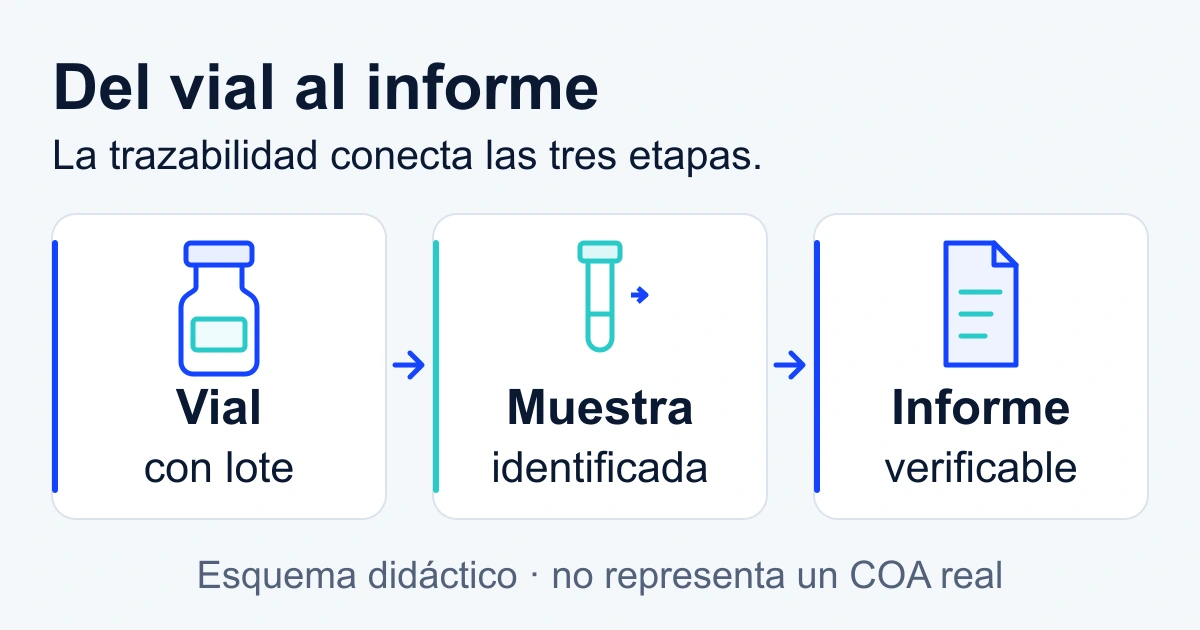
COA checklist: product, batch, sample, methods and results. Didactic example to separate purity, content and sterility.
Read guide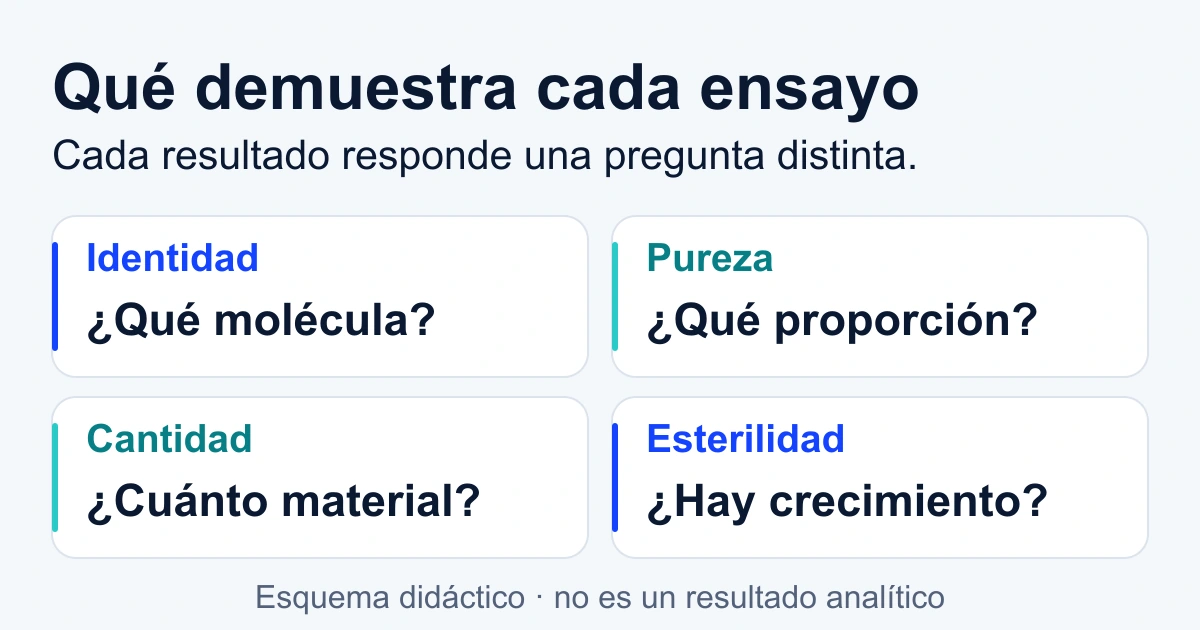 Quality and COA
Purity, identity and mg per vial: three different pieces of information
Why 99% HPLC purity does not mean vial quantity, sterility, or complete identity has been confirmed.
Read guide Quality and COA
Questions about peptides: COA, storage, mixtures and purchase
Documented answers to questions on Reddit: purity, mg per vial, GHK-Cu, heat, bacteriostatic water, retatrutide and mixtures.
Read guideQuality and COAHow to Verify a Peptide COA and Your Lab
Check the report number, lot, issuer and ISO scope. A PDF, QR or stamp does not verify all properties.
Read guideAre you looking for a specific answer?
Consult the index of questions about documentation, conservation, names and purchasing.
CHOOSE YOUR STARTING POINT
What do you need to understand?
Purchase and supply
Define the product, check who is selling and compare a complete proposal. These guides distinguish catalog existence, confirmed availability and delivery conditions.
Explore the topic ↗4 guidesQuality and COA
A purity percentage does not answer all questions. Learn to relate batch, sample, methods and results, and to verify the document with its issuer.
Explore the topic ↗8 guidesMolecules and evidence
Understand what reference is studied and what is offered in each format. Separate identity, composition and scientific results before interpreting a label or news item.
Explore the topic ↗5 guidesConservation and laboratory
Resolves doubts about dry material, solutions, transportation and units. The reference and assay protocol determine what conditions can be used.
Explore the topic ↗